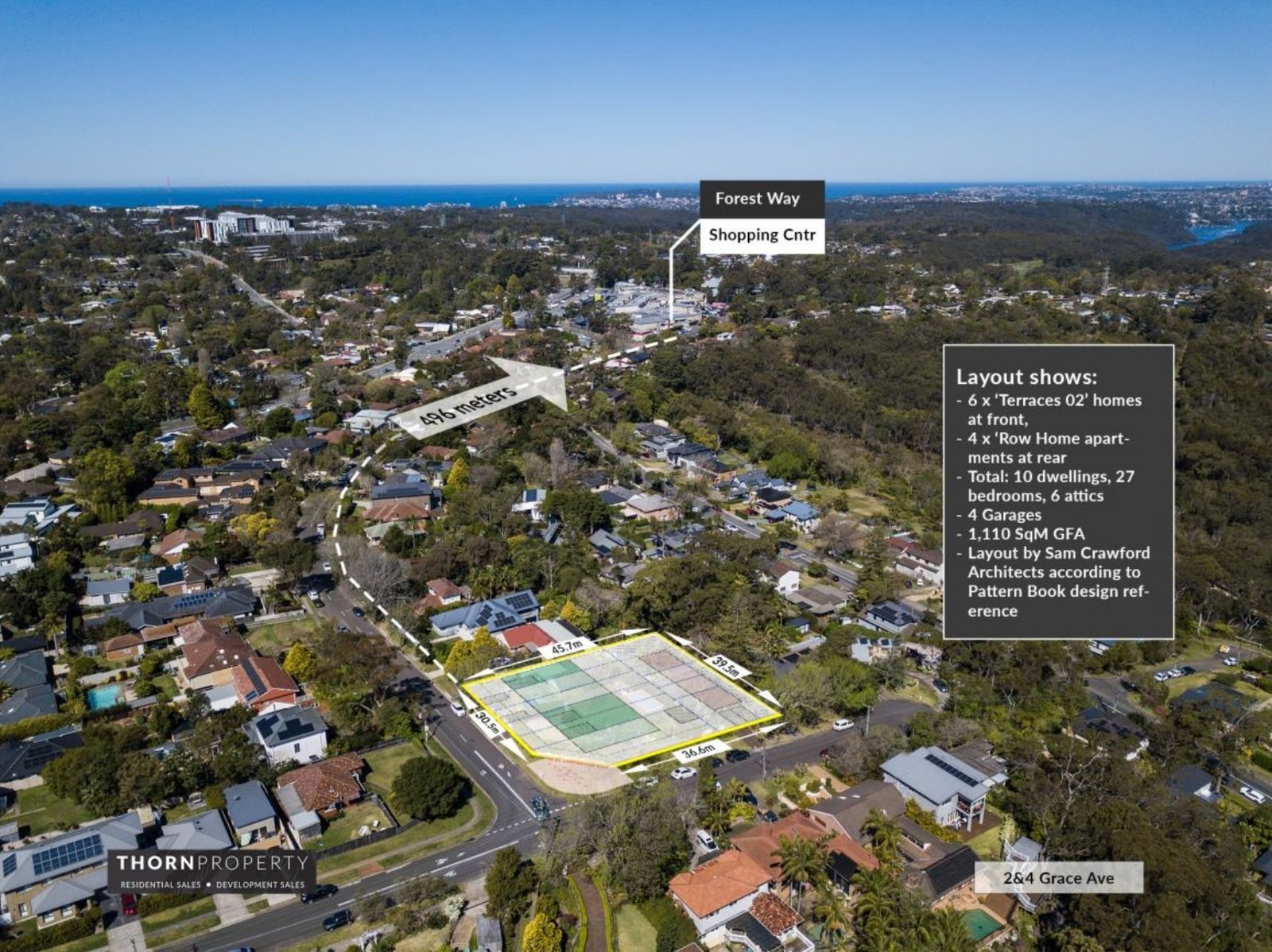
If you own a home in an NSW Low and Mid-Rise (LMR) area and prices are softening, the instinct is often to wait for "better times." But if you are selling and buying in the same market, a slump may not hurt you as much as you fear, because the property you want to buy is likely to have fallen in value too.
The more important question is whether your agent understands how to market your property as a development site, not simply as an older home on a street.
Quick Summary
A soft market is not automatically a bad time to sell an LMR property. Here is what matters most:
If you are selling and buying in the same market, price falls on both sides tend to cancel each other out.
Developers often become more active in a slow market, buying sites for when their project is finished, not for today's prices.
An LMR site can be worth more to a developer than its ordinary house-for-house value.
Marketing your property only as a family home can mean missing the buyers who value it most.
Development buyers are still active and acquisition finance is still available for suitable sites.
Before deciding, check whether your address is in an LMR area using the NSW Planning Portal Spatial Viewer.
Why a Falling Market Matters Less When You Are Upgrading
If you sell your LMR home at, say, 10% below the peak and buy your next home at a similar or greater discount, the market movement can largely cancel out. In some cases, the gap between your current property and the property you want to buy may actually improve.
Waiting only makes sense if you believe your property will recover faster than the property you intend to purchase. That is a market-timing bet, not a certainty.
Why Developers Buy LMR Sites in a Slow Market
Developers often become more active when the broader market is quiet. I call it "buying under the cover of night": while many owner-occupiers are hesitant and headlines focus on falling prices, developers are quietly looking for well-located sites. It is a big part of why Frenchs Forest and Forestville are leading LMR returns in Sydney.
Their logic is simple. They are not buying for today's market. They are buying for the market when the project is complete, approved, built and ready for sale. Even if prices are temporarily lower, a developer may see strong value in an LMR site because of its future development potential.
Why Your LMR Site May Be Worth More to a Developer
There is a long-standing saying in property development: “you make half your money on the purchase”.
That means the price paid for the site, together with the site's planning potential, shapes much of the eventual profit. A developer who secures the right LMR site at the right price during a quieter market has a stronger foundation for a successful project later.
For an owner, this matters because your property may be worth more to a developer than its ordinary "house-for-house" value, provided it is properly presented, researched and marketed.
Choosing an Agent Who Knows How to Sell to Developers
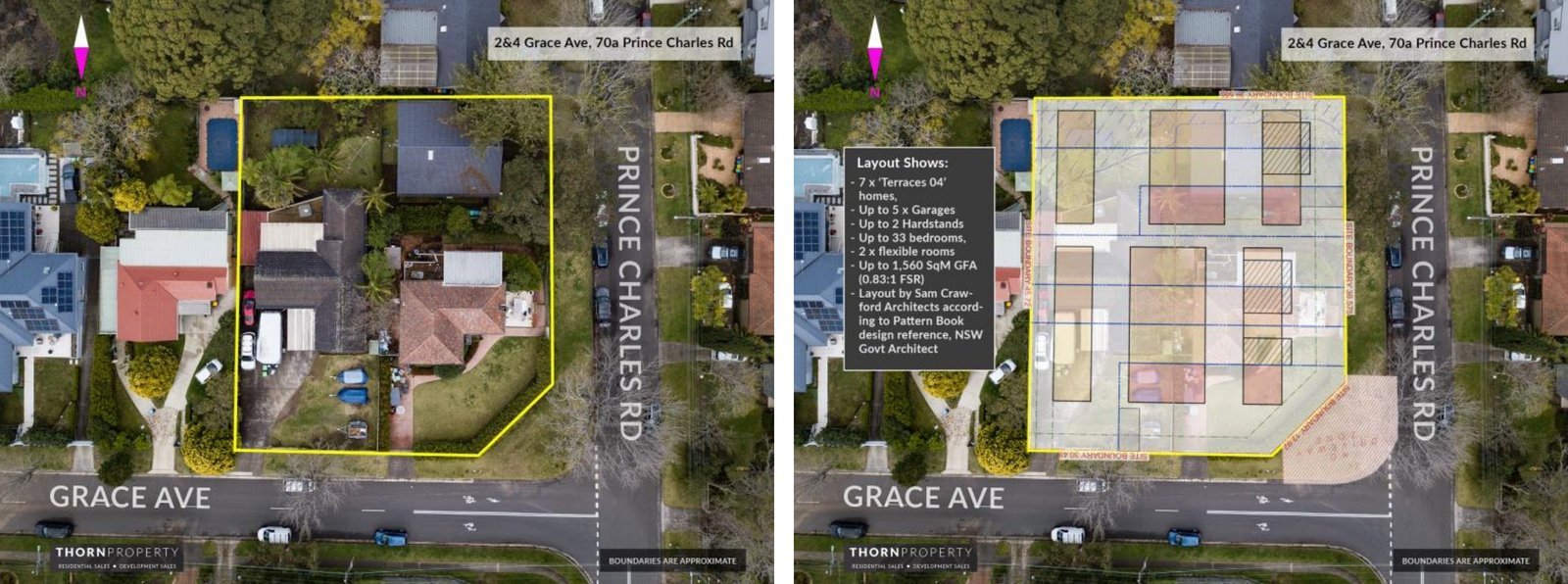
If you are selling an LMR property through an agent who only markets it as a family home, you may miss the buyers who value it most: developers, land bankers and project-home builders.
A specialist Northern Beaches development land agent who understands the development mindset will consider:
Zoning, permitted housing types and potential yield
Site width, depth, gradient, access and demolition considerations
Proximity to stations, shops, schools and transport
Whether the property sits in an inner or outer LMR area
Constraints such as heritage, flooding, bushfire or other exclusions
The likely buyer pool: owner-occupiers, renovators, developers and assembled-site buyers
Where the LMR Housing Policy Applies
The LMR policy applies in residential areas within an 800-metre walking distance of nominated town centres and train or light rail stations across Greater Sydney, the Central Coast, Illawarra Shoalhaven and the Hunter. Some sites are excluded because of constraints such as heritage listings, bushfire risk, certain flood exposure, coastal vulnerability or proximity to dangerous goods pipelines. [1] [2] For a local breakdown, read our guide to how LMR housing affects landowners on the Northern Beaches.
Are Development Buyers and Finance Still Active?
A property slump does not mean the development market stops. Buyers are still searching for sites, and banks and non-bank lenders continue to provide acquisition finance for suitable development opportunities.
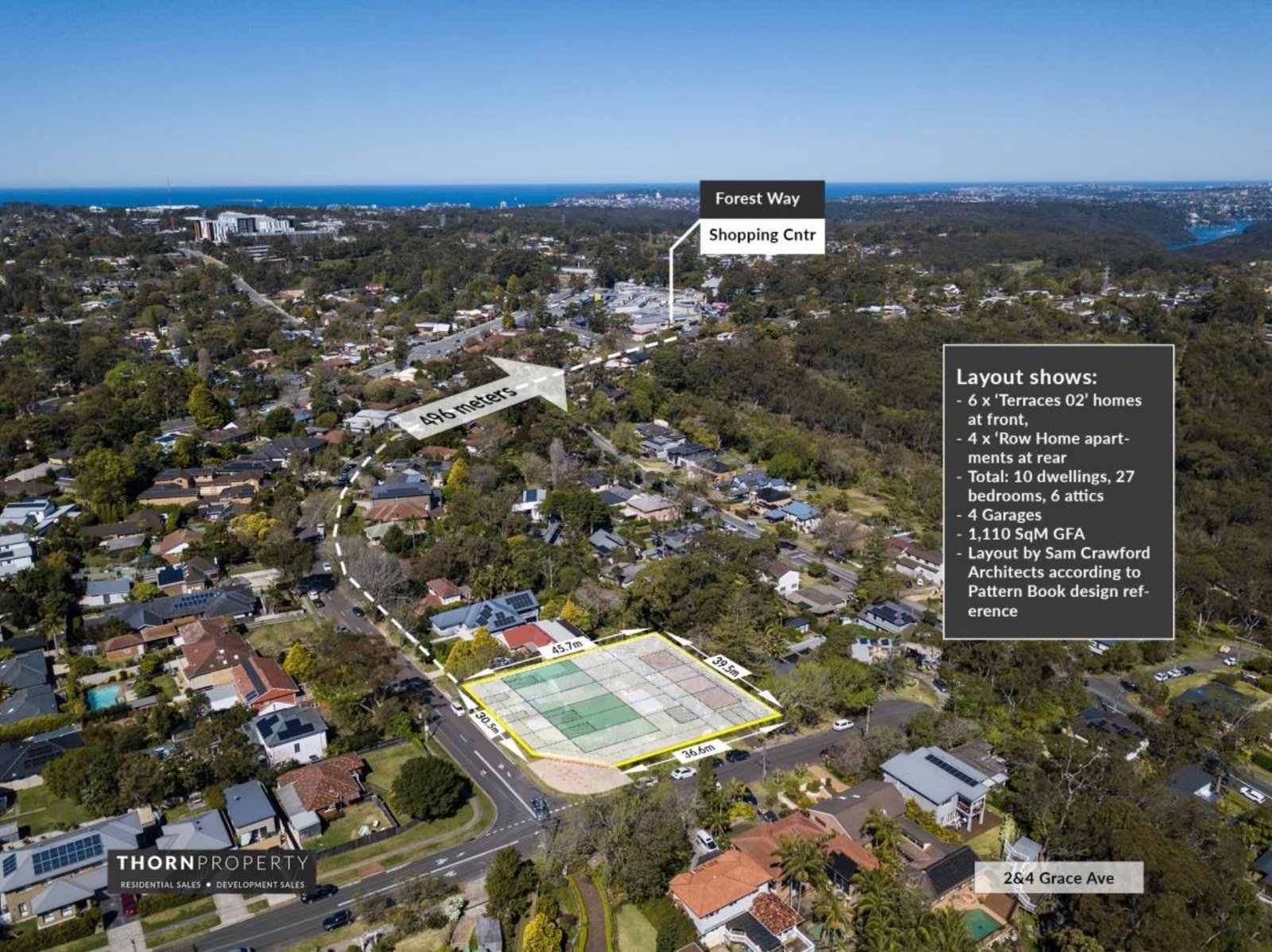
That is especially relevant for LMR land, where planning settings can support dual occupancies, terraces, townhouses and, in some locations, low- and mid-rise apartments. The policy has expanded housing options in eligible R2 and R3 areas, with greater density potential closer to centres and stations. [3] The NSW Housing Pattern Book is also helping to cut the cost of building these low-rise designs.

Should You Sell Your LMR Property Now or Wait?
Sell now if:
You need to sell and buy in the same market, and the price gap works in your favour.
Your property has genuine LMR or development potential that can attract developer buyers.
Your agent can run a properly structured campaign targeting both owner-occupiers and developers.
You value certainty over trying to pick the exact bottom of the market.
Consider waiting only if:
You do not need to buy again immediately.
You have a strong reason to believe your suburb will recover ahead of the wider market.
You can comfortably hold the property through further uncertainty.
You need time to investigate a potential development outcome, subdivision or site assembly.
How to Check If Your Property Is in an LMR Area
Before making a decision, check whether your address is in an LMR area by entering it into the NSW Planning Portal Spatial Viewer.
Remember that an online map is only the starting point. Site-specific factors such as zoning, lot dimensions, heritage, flooding, bushfire, access and the exact walking-distance test can all affect what is realistically possible. [2] [4]
A market slump can be an opportunity for LMR owners, but only if the property is sold to the right audience with the right development story. Browse our current development site listings and recently sold development sites, or talk to us about your LMR property.
Frequently Asked Questions
What is an LMR area in NSW?
An LMR area is a residential area covered by the NSW Government's Low and Mid-Rise Housing Policy. It generally covers land within 800 metres walking distance of nominated town centres and train or light rail stations in Greater Sydney, the Central Coast, Illawarra Shoalhaven and the Hunter, where more housing types such as dual occupancies, terraces, townhouses and some apartments are supported.
How do I check if my property is in an LMR area?
Enter your address into the NSW Planning Portal Spatial Viewer. Keep in mind the map is only a starting point, as site-specific constraints like heritage, flooding and bushfire can still rule a property out.
Will a developer pay more for my LMR property?
Possibly. Developers value a site on what can be built on it, not just the existing house. If your property has genuine development potential and is marketed to the right buyers, it may achieve more than its ordinary house-for-house value.
Is it better to sell an LMR property in a slump or wait?
If you are selling and buying in the same market, a slump often affects both sides of the transaction equally, so waiting may not leave you better off. Waiting makes more sense if you do not need to buy again soon and can comfortably hold the property.
What makes an LMR site attractive to developers?
Developers look at zoning and permitted housing types, lot width and depth, slope, access, proximity to stations and town centres, and whether the site is in an inner or outer LMR area. Sites free of constraints like heritage or flooding are generally more appealing.
Can my property be in an LMR area but still be excluded?
Yes. Some properties within the mapped areas are excluded because of constraints such as heritage listings, bushfire risk, certain flood exposure, coastal vulnerability or proximity to dangerous goods pipelines. It is worth getting site-specific advice before you sell.
Sources
https://mosman.nsw.gov.au/planning-and-development/low-mid-rise-policy/about
https://mosman.nsw.gov.au/planning-and-development/low-mid-rise-policy/faq
https://www.nsw.gov.au/departments-and-agencies/spatial-services/access-our-hubs
https://pvlaw.com.au/Portals/0/Docs/LMR Power Point - PVL 17 July.pdf?ver=r9O9-bbk94J9Oh8GIqtlnA==
https://www.feasly.com.au/guides/nsw-low-and-mid-rise-housing-reform-developer-guide
https://dddi.com.au/insights/industry/eplanning-spatial-viewer-guide
https://www.planning.nsw.gov.au/sites/default/files/2026-08/support-hub-using-spatial-viewer.pdf
https://www.blacktown.nsw.gov.au/Plan-build/Low-and-Mid-Rise-Housing
https://mosman.nsw.gov.au/sites/default/files/2025-11/Mosman Daily - 6 November 2025 - pp12-13.pdf
https://mosman.nsw.gov.au/sites/default/files/2025-10/250260.001.Planning.Reforms.Letter2.05_HR.pdf